Moonstruck Gamebook Rules
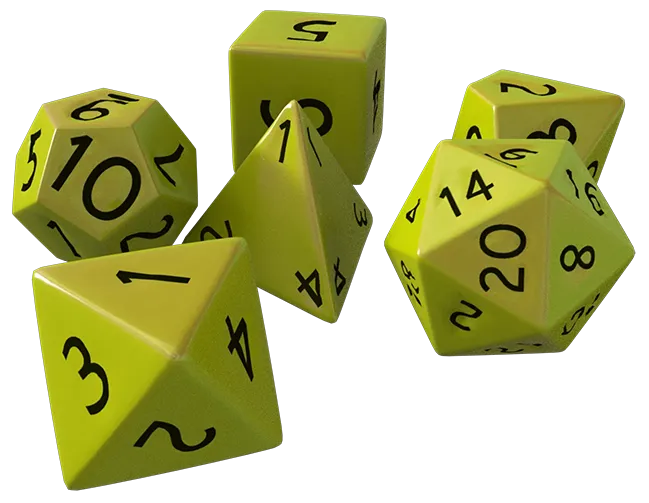
There is a simple rule set for the gamebook mechanics. It is planned for each book to use the same attributes, but the abilities may be added to for a particular game. I would also like to make it possible for players to continue to play the same character over different books.
The protagonist in The Darkened son is already defined in terms of back story, but new games will be more open in this aspect of the character being played.
Attributes
Your character has several attributes that will be used and tested during a game. The higher your score, the better.
Agility
- Your reactions, how agile or dexterous you are. For example, when you are avoiding a falling object.
Charisma
- Your personality and good (or bad) looks. How charming you are.
Health
- A measure of your current health and how close to life or death you are. Falling to zero health or less means you have been defeated, and the game ends.
Intelligence
- How smart you are. Intelligence is used for problem-solving and working out complex tasks.
Prowess
- A measure of your skill in combat.
Sanity
- Sanity reflects how in control you are of your actions. Some things may push you too far beyond reason.
Strength
- For example, strength comes into play when lifting heavy objects or breaking down a door.
Abilities
Your character will have various abilities, and an initial score will be determined when creating the character. The higher your score, the better. For example, here are the abilities used in The Darkened Son.
Negotiation
- How well you interact with people, bargaining or extracting information etc.
Observation
- How observant you are - how well you notice things.
Occult
- Knowledge of unearthly things.
Research
- How well you are able to learn from facts and evidence.
Science
- Your knowledge of Scientific matters and properties.
Attributes and abilities may be affected by special items in the game.
Experience Points (XP) are awarded during the game; you can use these to increase your ability scores. XP cannot be used to increase attributes.
Rolling a Character
Starting Attributes
Apart from Health, attributes are all initially determined by a roll of one 1d20 dice and then adding 50 to the roll.
Example
- For Strength, you roll one 20-sided dice and add 50.
- Rolling a 7 gives you a starting Strength of 57.
Repeat for the other attributes listed above. Health is slightly different:
- Health has an initial value of 20 + 1d20.
- Rolling 13 will give you a starting Health of 33.
Starting Abilities
Roll your ability scores the same as for Attributes, 1d20 plus 50 points each.
You may reallocate your scores to create a character that is more to your liking if you wish.
Example
If your score for Negotiation is 56 and your score for Research is 68, you may swap them around if you want your character to be better at negotiating.
This procedure is to allow some flexibility in character creation.
Testing an Attribute
Tests are conducted with percentile dice, which can be thought of as 100-sided dice (1d100). You roll two ten-sided dice, one representing tens and the other dice ones.
You will be asked to roll a test against an attribute score at various points in the game. To do this, you make a percentile roll (1d100), and if you roll less than your attribute score, you have passed the test. Otherwise, you have failed.
Rolling the exact value is considered a failure.
Example
- Rolling 57 against an Attribute score of 65 is a success.
- Rolling 87 against an Attribute score of 52 is a failure.
Testing an Ability
Testing an ability is the same process as testing an attribute. You need to roll below your ability score to succeed.
Combat
Both players and NPCs (non-player characters) have a Prowess attribute governing combat. The higher this score, the more likely they are to be successful in combat.
Initiative
Before combat occurs, roll a 1d20 (1 x 20-sided dice) for each participant to decide who gets the first attack. Whoever rolls the lowest gets the initiative. On a draw roll again until there is a clear winner. Occasionally, the story will award the first initiative in advance.
Rounds
If you have the first initiative, roll percentile dice (1d100), and if the roll is less than your Prowess, you have succeeded in your attack method.
You will then roll the appropriate dice to determine the damage you have inflicted and deduct that amount from your opponent's Health. Then, proceed with the same method to determine the outcome of your opponent's attack.
The same process applies if the opponent has the first initiative, except that your opponent has the first attack. Continue until either side is defeated. The story will then direct you to the consequences.
Example
- Player: Prowess of 65. Using a sword with damage of 1d8.
- Opponent (NPC): Prowess of 62. Using fists with damage of 1d4.
Let us assume that the player had gained the initiative; they would then make a percentile dice roll (1d100). If they roll under 65, they successfully strike the opponent and can then roll a 1d8 to determine damage and deduct it from the opponent's Health.
You then apply the same process for the opponent and repeat until there is a winner (usually when either side has zero or less Health).
If you or your opponent fail to attack successfully, no damage is done.
Experience Points
You may be awarded Experience Points (XP) at places throughout a game for succeeding in a challenge. You can use this XP to increase your ability scores.
In other words, for example, you were awarded 5XP - you may add 5 points to any of your ability scores.
This allows your character to improve from any successes. XP should be applied as awarded - i.e. do not save up XP.
You can rise to a maximum of 90 points for each ability.
Fortune Points
Fortune Points (FP) are rewards for completing parts of the game. You can spend fortune points to help win an attribute or ability dice roll and turn a failure into success. To do this, you spend as many fortune points as it would take to lower your score below the target value.
Example
For example, let us say you have 10 Fortune Points, and your Charisma is 54. You are asked to test your Charisma and must roll 53 or lower. Say your roll fails with a 58 - then there is a five-point difference (58 - 53). So, you may elect to spend 5 of your Fortune Points (if you have them) to turn the failure into a success.
You can also use FP to win combat dice rolls where you will be rolling against Prowess.
Notes
If you use something to heal your Health, you cannot exceed the initial value. So, say you started the game with 32 health, you may only heal up to 32 points and not go over it.
Some objects in the game affect your attributes if you possess them. For example, if your Strength is 62 and you have a ring that boosts it by +5 points, you may roll tests against the new score of 67.
For Percentile Dice (1d100) rolls, a roll of all zeros is considered to be 100.